
What is negative self-talk?
Nearly everyone engages in negative self-talk at times, especially when we feel like we’ve messed up. It can act as a form of internal consequence, a way of punishing ourselves. For some, negative self-talk becomes a perpetual cycle, like a devil sitting on our shoulders, constantly reminding us of past failures, disappointments, worst fears, harsh self-criticism, imagined unpleasant futures, or other persistent self-doubts. Though it can be torturous, negative self-talk is usually not something people have conscious control over, which can make it frustrating at times.
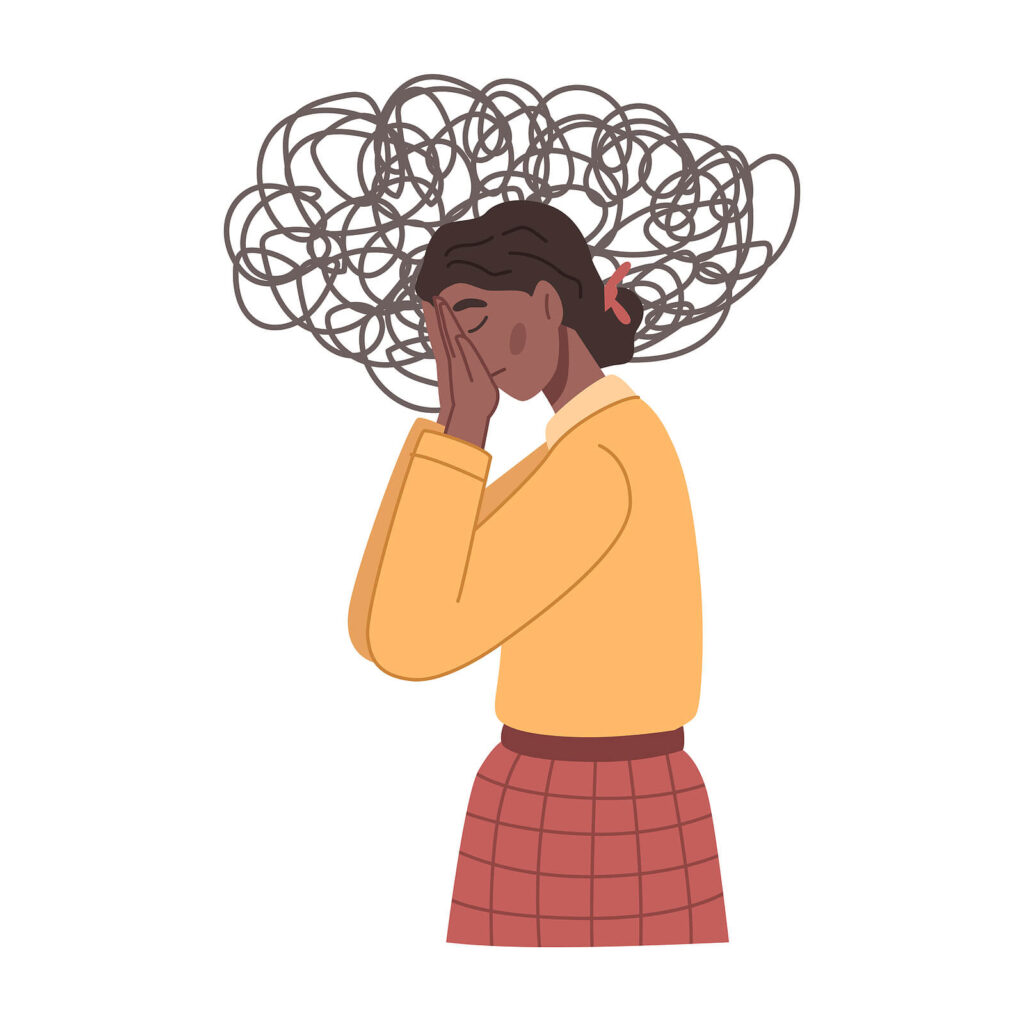
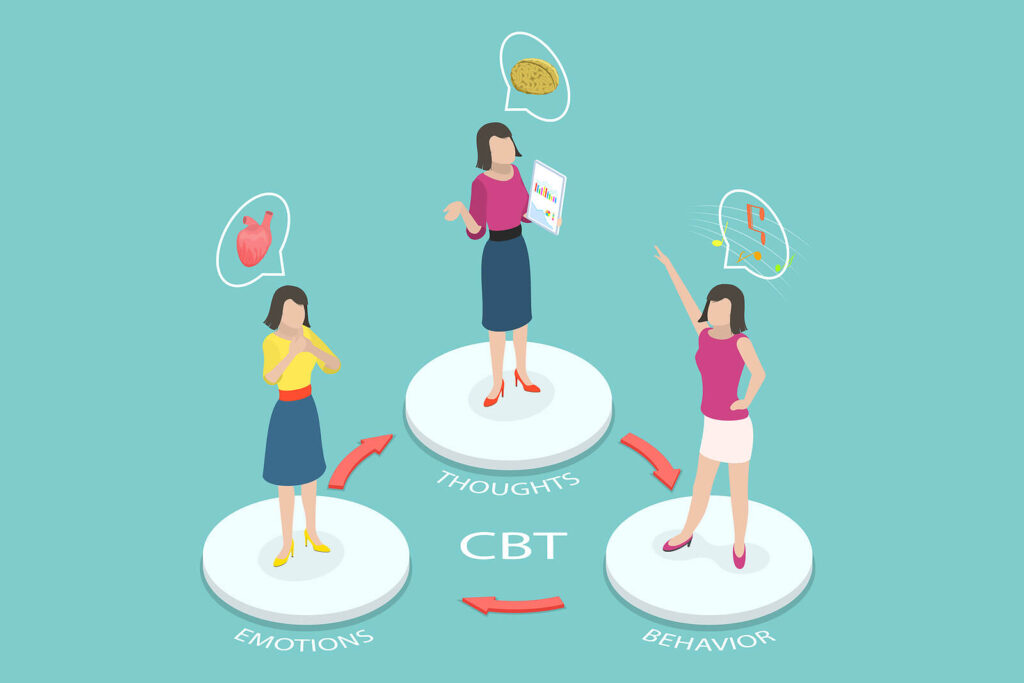
Self-talk is the way we talk to ourselves, or our inner voice, and it can serve many different purposes, such as helping us process experiences, solve problems, or motivate us to take action. Negative self-talk is when the inner voice is filled with self-doubt, criticism, pessimism, or amplified worries. It can sound like, “I’m not good enough,” “I always mess things up,” or “I’ll never succeed.” This way of speaking to ourselves, especially self-criticism, can create increased distress and difficulty coping with negative life events (Campos et al., 2018). The way we speak to ourselves impacts self-esteem, self-confidence, anxiety, and task performance. On the contrary, motivational self-talk can decrease distressing and negative thoughts and increase trust in your abilities to accomplish goals (Hatzigeorgiadis et al., 2009). Given this research, it can be important to address negative self-talk to facilitate a healthier internal dynamic within the self. Cognitive behavioral therapy (CBT) techniques can be particularly useful in identifying and challenging harmful thought patterns.
Mindfulness of Negative Self-Talk
Sometimes individuals engage in negative self-talk without even realizing it is a pattern of automatic, habitual thinking. Due to the way individuals speak to themselves can become second nature, mindfulness can serve as a tool to help notice when engaging in negative self-talk. Mindfulness involves observing thoughts and feelings in a specific moment without attaching meaning, judgment, or evaluation to it. This attentiveness to negative self-talk can help recognize triggers, gain perspective, and begin using techniques to overcome the behavior.
It’s important to note that trying to block or suppress negative thoughts can actually make them worse. The ironic process theory explains this paradox: when individuals attempt to push a specific thought out of their minds, they often end up thinking about it more. In contrast, mindfulness allows individuals to intentionally focus on their thoughts without judgment, which can reduce their impact.
1. Observe your thoughts
a. Being mindful of negative self-talk involves first observing the negative thoughts as thoughts, rather than as facts about the world or yourself.
2. Describe your thoughts
a. Describe these thoughts without judgment, as if you were a reporter simply reporting what is coming into your mind.
3. Adopt a curious mind
a. Try to observe your thoughts as they come and go, without attachment. Watch them in your mind and ask yourself: “Where do these thoughts come from?” “Where do they go?”
4. Remember you are not your thoughts.
a. Thoughts are simply mental events that come and go—they do not define who you are. They do not define you, and you do not have to act on them.
b. Recognize that you have the power to choose how to respond to them.
Challenge the Inner Critic
Cognitive restructuring is a technique that helps identify and dispute unrealistic or unhelpful thoughts and can be applied to help assess and challenge negative self-talk (Deacon et al., 2011).
1. Identify the negative thoughts
a. Pulling from the mindfulness technique, it is important to be aware of automatic negative thoughts and describe the thoughts without judgment and as an impartial observer. This shift allows you to separate yourself from the thought and recognize that it is just a mental event, not a defining truth about yourself. b. For example, instead of “I am a failure,” Observe the thought, “I am thinking that I am a failure.”
2. Evidence that supports the thought
a. Break down what are the exact events that are leading to a generalized negative thought. This can help examine the facts of a situation and the negative self-talk rather than interpretations or emotion-driven thinking.
b. For example, if “I am thinking that I am a failure,” supportive evidence may be that you missed a work deadline or received a failing grade for a class.
c. Note that we want the evidence to be facts, not assumptions.
3. Evidence that doesn’t support the thought
a. Bring balance and perspective to the negative thoughts. Highlight evidence that indicates the negative thought is not absolute or always true in all areas of your life.
b. For example, if “I am thinking that I am a failure” disconfirming evidence can be noting when you met deadlines and completed past tasks. You might recall a project where you delivered on time, received positive feedback or achieved the goal despite challenges.
4. Balanced thought
a. Taking both sides of the evidence, it is significant to transform unhelpful, negative self-talk into more balanced, realistic thoughts. It can help shift the extremes of negative self-talk to find a more accurate and fair view of yourself and the situation.
b. For example, “I didn’t meet my deadline, and I made mistakes, but that doesn’t mean I’m a failure. I’ve successfully completed tasks before and learned from my past mistakes. I can use this experience to improve and do better next time.”
Empathy and Self-Compassion
As you work on developing a healthier, more balanced relationship with your thoughts, it’s crucial to acknowledge that changing long-held beliefs about yourself can be difficult. Recognizing patterns of negative self-talk and challenging them may take a lot of mental effort and emotional resilience, so it is important to give yourself empathy and self-compassion. Validate your challenges and show yourself the same kindness you would offer to a friend facing similar difficulties. It is also important to celebrate your points of success rather than ruminate and hone in on mistakes to change your inner voice to be more supportive and encouraging.
If you’re looking for additional CBT techniques to challenge negative self-talk and build confidence from the inside out, begin CBT therapy in New York today. Our therapists at Kind Mind specialize in helping you recognize unhelpful patterns, strengthen self-compassion, and reconnect with your strengths. You don’t have to keep struggling with self-criticism—we’re here to support you every step of the way.

Ready to Quiet Your Inner Critic & Build a More Compassionate Relationship with Yourself?
You don’t have to navigate the cycle of negative self-talk alone. CBT therapy can help you develop the tools to notice unhelpful thought patterns, challenge them with curiosity and self-compassion, and begin speaking to yourself in a way that supports growth rather than shame.
- If you’re ready to explore how therapy can support your healing journey, reach out today.
- Discover more CBT techniques by exploring our blogs.
- Together, we can help you rewrite the story you tell yourself—with kindness, clarity, and care.
Therapy Services in New York and North Carolina Designed for You
At Kind Mind Psychology, we offer more than just Cognitive behavioral therapy. We’re here to support your mental health journey in whatever form it takes. From LGBTQ+ affirming therapy that creates space to explore and celebrate your identity, to couples and sex therapy that helps deepen connection and communication. Our services also include teen therapy, IFS therapy, and alternative lifestyle therapy. If you’re working through the impact of trauma, we offer evidence-based trauma treatment to help you heal at your own pace. Whether you’re looking for DBT or ADHD therapy, we’re committed to walking alongside you with care and expertise.
References
Campos, R. C., Holden, R. R., Caçador, B., Fragata, A. S., & Baleizão, C. (2018). Self-criticism, intensity of perceived negative life events, and distress: Results from a two-wave study. Personality and Individual Differences, 124, 145–149.
Deacon, B. J., Fawzy, T. I., Lickel, J. J., & Wolitzky-Taylor, K. B. (2011). Cognitive defusion versus cognitive restructuring in the treatment of negative self-referential thoughts: An investigation of process and outcome. Journal of Cognitive Psychotherapy, 25(3), 218–232. https://doi.org/10.1891/0889-8391.25.3.218
Hatzigeorgiadis, A., Zourbanos, N., Mpoumpaki, S., & Theodorakis, Y. (2009). Mechanisms underlying the self-talk–performance relationship: The effects of motivational self-talk on self-confidence and anxiety. Psychology of Sport and Exercise, 10(1), 186–192. https://doi.org/10.1016/j.psychsport.2008.07.009
Contact Kind Mind Psychology to start working with a therapist.
Frequently Asked Questions
What causes negative self-talk?
Negative self-talk often develops from early experiences, critical caregivers, social comparison, or internalized messages from a culture that did not affirm your identity. CBT helps you identify where these patterns come from and replace them with more accurate, compassionate self-assessment.
Can therapy help with negative self-talk?
Yes. CBT is specifically designed to identify and change negative thought patterns. At Kind Mind, we use CBT to help you recognize cognitive distortions, challenge them with evidence, and build a more balanced internal narrative.
Ready to Get Started?
If you’re ready to start working with a therapist who gets it, contact Kind Mind Psychology or call 646-918-1181 (NYC) / 704-218-9194 (Charlotte, NC). We offer virtual sessions in NY, NJ, NC, and PSYPACT states. We accept insurance and offer sliding scale starting at $25/session. Visit our Insurance & Fees page for details.
Wenzhen Li, MHC-LP, is an Associate Therapist at Kind Mind Psychology. She is trained in CBT, DBT, EMDR, RO-DBT, and CPT, and co-leads Kind Mind’s Wednesday evening DBT skills group. She specializes in anxiety, depression, ADHD, trauma, personality disorders, and problematic eating. Kind Mind Psychology offers virtual sessions in NY, NJ, and NC.