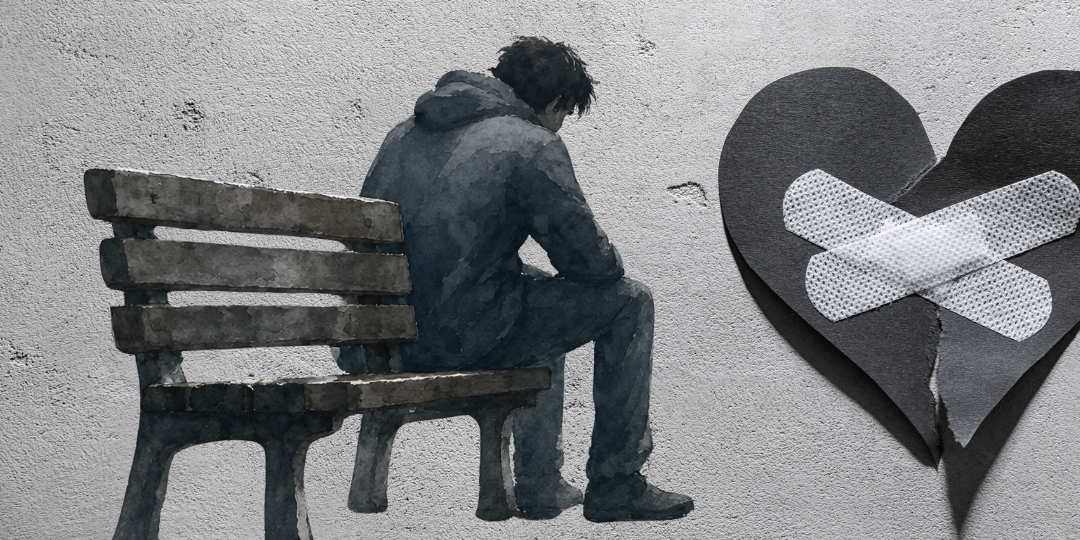
If you have ADHD and you’ve described a feeling of sudden, overwhelming emotional pain in response to criticism, rejection, or the sense that you’ve disappointed someone — you may have encountered the term Rejection Sensitive Dysphoria, or RSD.
RSD is not a formal DSM diagnosis. It’s a clinical descriptor for a pattern that researchers and clinicians have observed consistently in people with ADHD: an intense, often disproportionate emotional response to real or perceived rejection, failure, or criticism. For people who experience it, RSD can be one of the most impairing features of ADHD — more disruptive, in some cases, than the attentional symptoms themselves.
What RSD Actually Feels Like
The emotional experience of RSD is often described as sudden and overwhelming — an almost physical pain response triggered by criticism, perceived disapproval, romantic rejection, or a sense of having failed someone. It’s not just sadness or disappointment. It’s a flooding of intense emotion — shame, hurt, rage, or some combination — that can feel completely out of proportion to the triggering event.
A colleague’s neutral feedback on your work. A friend who didn’t text back as quickly as usual. A partner’s tone of voice shifting slightly during a disagreement. Any of these can trigger RSD in someone sensitive to it, producing an emotional response that bewilders the people around them and often bewilders the person experiencing it.
RSD episodes tend to be intense but relatively brief — they can pass within hours. But while they’re happening, they can feel unbearable. And the anticipatory anxiety around potential RSD triggers — avoiding situations where you might be criticized, holding back in relationships to prevent the pain of rejection — can be just as impairing as the episodes themselves.
Why RSD Is More Common in People With ADHD
The neurological explanation for RSD’s connection to ADHD involves the same dopaminergic and noradrenergic pathways that underlie ADHD more broadly. Emotional regulation is an executive function — and executive function difficulties in ADHD extend to the regulation of emotional responses, not just attention and impulse control.
Specifically, ADHD involves a reduced ability to modulate emotional intensity in the moment — to apply the brakes to an emotional response before it reaches full intensity. For most people, there’s a natural dampening process between the trigger and the full emotional response. In ADHD, that dampening is less reliable, which means emotional responses can go from 0 to 10 very quickly.
There’s also a lifetime accumulation factor. People with ADHD typically experience significantly more criticism, failure, correction, and disappointment than their neurotypical peers — from parents, teachers, employers, and partners who were responding to ADHD behaviors without understanding their origin. Over years, this accumulation can sensitize the emotional system to criticism and rejection in ways that go beyond the neurological baseline.
How RSD Affects Daily Life
In Relationships
RSD can make close relationships feel high-stakes and fragile. The anticipation of rejection or disappointment can drive preemptive withdrawal, people-pleasing, or conflict avoidance. Partners and friends who don’t understand RSD often experience the reactions it produces as disproportionate, confusing, or manipulative — which adds another layer of relational damage. It is one of the ways ADHD affects relationships that has nothing to do with forgotten plans or unanswered texts, and it is frequently the hardest part for both people to talk about.
At Work
Performance reviews, constructive feedback, public speaking, and situations where judgment or evaluation are possible can all trigger RSD anticipatory anxiety. Many adults with RSD develop avoidance patterns around situations where criticism is likely — turning down opportunities, under-sharing ideas, playing it safe in ways that limit their professional development. When that avoidance becomes pervasive enough to shape career decisions, anxiety therapy often needs to be part of the treatment plan alongside the ADHD work.
In Self-Perception
The accumulated experience of RSD — the repeated pain, the disproportionate reactions, the secondary shame about having those reactions — often feeds a deeply negative self-concept. Many adults with RSD describe a persistent sense that they are too much, too sensitive, fundamentally flawed. This is not an accurate self-assessment. It is the psychological residue of an undertreated neurological condition.
What Helps
Accurate Diagnosis
Understanding that what you experience as RSD is a feature of ADHD — not evidence of weakness or emotional instability — is the first and most important shift. Naming it changes its meaning. It doesn’t make the pain go away, but it removes the secondary shame layer.
For adults diagnosed with ADHD later in life, this reframe can be significant. Decades of apparent evidence that you overreact, that you take things too hard, that you can’t handle feedback the way everyone else seems to, get reinterpreted as features of a condition that was never identified or treated. A thorough diagnostic evaluation matters here for a second reason as well: it clarifies what else is in the picture, since anxiety, depression, and trauma histories all interact with RSD and all change what treatment should target.
DBT Skills
Dialectical Behavior Therapy offers some of the most directly applicable skills for RSD. The emotion regulation module — particularly Check the Facts and Opposite Action — helps interrupt the escalation process. Distress tolerance skills provide alternatives to acting on the full intensity of an RSD episode. Mindfulness skills build the pause between trigger and response that ADHD tends to collapse. Many clients with ADHD and RSD find DBT to be the most practically useful therapeutic tool they encounter.
Therapy for the Underlying Accumulation
DBT skills address the episode. Therapy addresses the years of accumulated pain, the negative self-beliefs, and the relational patterns that RSD has generated. IFS therapy is particularly well-suited to this work — it approaches the parts of you that were shaped by repeated rejection and criticism with curiosity rather than judgment, which can begin to shift the deep self-concept issues that RSD contributes to.
Medication
Some people with ADHD find that stimulant medication reduces RSD intensity by improving overall emotional regulation. Non-stimulant medications like guanfacine have also shown promise specifically for the emotional regulation component of ADHD. This is a conversation to have with a prescriber who understands ADHD and its emotional features.
At Kind Mind Psychology, we work with many adults for whom RSD is a central presenting concern. If this post describes something you’ve been living with — reach out. You can learn more about our ADHD therapy approach or contact us directly to get started.
Frequently Asked Questions
Is rejection sensitive dysphoria a real diagnosis?
RSD is not a formal DSM-5 diagnosis, but it is a clinically well-recognized pattern that researchers and practitioners in the ADHD field have described consistently. It is understood as a feature of ADHD’s emotional dysregulation component rather than a separate condition. The lack of a formal diagnostic code doesn’t diminish its clinical reality or the degree to which it impairs people’s lives.
Can you have RSD without ADHD?
Intense rejection sensitivity can occur in other conditions — including borderline personality disorder, depression, and anxiety disorders. What distinguishes ADHD-related RSD is its specific connection to the executive function and dopaminergic dysregulation of ADHD, its typical onset in childhood, and its co-occurrence with the other features of ADHD. A careful diagnostic evaluation can help clarify what’s driving the sensitivity.
Is RSD the same as being “too sensitive”?
No. Being labeled as “too sensitive” is one of the most common experiences of people with RSD, and it is one of the most harmful. RSD is a neurologically-based response pattern, not a character flaw or a choice. The intensity of the response is not proportional to the trigger because the regulatory system is impaired — not because the person is weak or dramatic.
Can RSD get better with treatment?
Yes. While RSD may not fully resolve, it responds meaningfully to ADHD treatment — both medication and therapy. DBT skills reduce the intensity and duration of RSD episodes. Therapy addresses the accumulated shame and negative self-beliefs that RSD generates over time. Many clients report significant improvement in both the frequency and the manageable quality of RSD responses with consistent treatment.
Ready to Get Started?
If you’re ready to start working with a therapist who gets it, contact Kind Mind Psychology or call 646-918-1181 (NYC) / 704-218-9194 (Charlotte, NC). We offer virtual sessions in NY, NJ, NC, and PSYPACT states. We accept insurance and offer sliding scale starting at $25/session. Visit our Insurance & Fees page for details.
About the Author
Dr. Monica Johnson, PsyD is a licensed clinical psychologist, AASECT Certified Sex Therapist, and founder of Kind Mind Psychology — a virtual group practice serving clients across New York, New Jersey, North Carolina, Delaware, and 40+ PSYPACT states. She is the host of ADHD & on Understood.org, the author of an Audible Original, and co-author of Addressing Race-Based Stress in Therapy with Black Clients (Routledge). Her work has been featured in The New York Times, NPR, British Vogue, SELF, and the Associated Press. Kind Mind specializes in evidence-based, culturally affirming care for BIPOC, LGBTQ+, and neurodivergent communities.