
If you’ve ever sat across from a clinician and realized you were spending more time explaining your identity than working on the thing you came in for, you already know what the problem is. Too many therapists treat cultural competence as something they checked off in graduate school. At Kind Mind Psychology, we treat it as the foundation of everything we do.
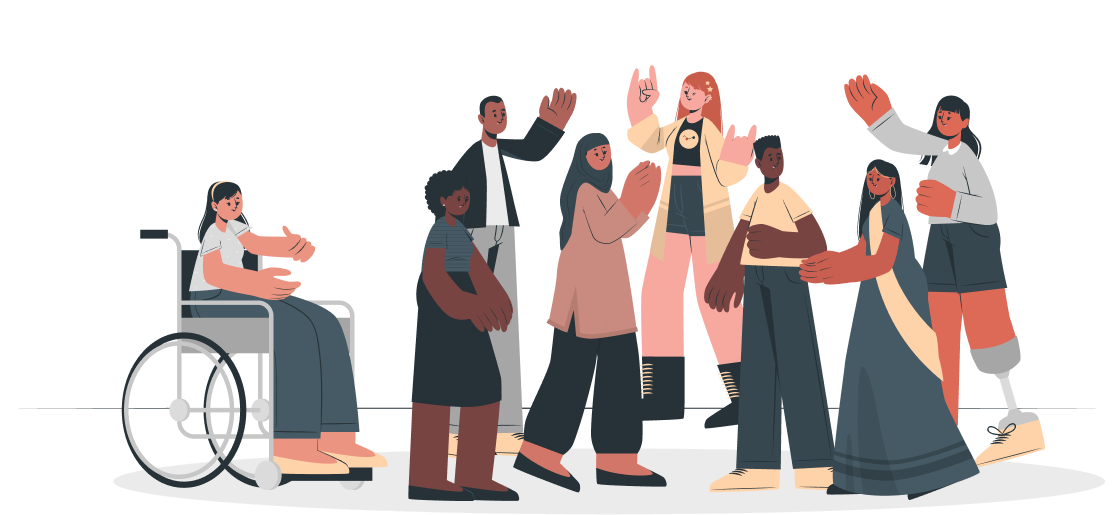
Kind Mind is a Black-owned practice founded on a mission to reduce healthcare disparities in both access and quality of care. We were built for people who have been historically underserved, misunderstood, or outright harmed by the mental health system. That includes BIPOC individuals navigating racial stress, discrimination, and the weight of living in systems that were not designed with them in mind. It includes LGBTQ+ clients managing minority stress, identity development, and the daily toll of existing in a world that doesn’t always make space for them. It includes people in polyamorous, ENM, and kink communities who need a therapist that isn’t going to flinch. It includes immigrants and children of immigrants, people with disabilities, neurodivergent individuals, and anyone who has been told, in any number of ways, that the way they move through the world is a problem.
We are also here for everyone else. Affirming care is not exclusive care. It means every person who walks through our door is met with the same standard of respect, curiosity, and clinical rigor, regardless of their background.
It’s easy for a practice to say they’re affirming. It’s harder to show you what that means when you’re actually in the room. Here’s what you can expect from us:
Your identity is not a sidebar. We don’t treat your race, gender, sexuality, religion, relationship structure, or cultural background as separate from the reason you came to therapy. These things shape how you experience stress, trauma, relationships, and the world. They are part of the clinical picture, and we treat them that way.
We don’t make assumptions. We won’t assume your experience based on how you look, who you love, or where you come from. We ask, we listen, and we follow your lead.
We know the difference between a symptom and a response. Hypervigilance in a Black man who has been profiled by police is not an anxiety disorder. Emotional exhaustion in a queer person navigating a hostile family is not a personality flaw. We understand the difference between a clinical symptom and a survival response to an oppressive environment, and we treat accordingly.
We will not treat your differences as problems. Your queerness is not a disorder. Your polyamory is not avoidance. Your cultural values are not resistance. We affirm who you are while helping you work through what’s hurting.
We welcome feedback. If something lands wrong in session, if we miss the mark, if a microaggression occurs, we want to know. We are committed to sitting with that discomfort, listening, reflecting, and correcting. That’s not a disclaimer. That’s a practice value we hold ourselves to every day.
Culturally affirming care at Kind Mind is not a personality trait we hire for and hope for the best. It is built into how our clinicians are trained, supervised, and evaluated.
Our founder, Dr. Monica Johnson, co-authored Addressing Race-Based Stress in Therapy with Black Clients: Using Multicultural and Dialectical Behavior Therapy Techniques (Routledge), a book that provides mental health professionals with a practical framework for culturally responsive treatment. That framework is embedded in our clinical training. Dr. Johnson directly trains and supervises every clinician at Kind Mind, and ongoing professional development in cultural competence, anti-oppression, and affirming practice is required, not optional.
Our team is diverse across race, gender, sexuality, and lived experience. That diversity is intentional and it shapes how we conceptualize cases, how we connect with clients, and how we hold each other accountable.
We use evidence-based approaches that we adapt to fit the person in the room, not the other way around. That includes Cognitive Behavioral Therapy (CBT), Dialectical Behavior Therapy (DBT), EMDR, Internal Family Systems (IFS), Prolonged Exposure, Cognitive Processing Therapy, Acceptance and Commitment Therapy, and psychodynamic approaches. Our practice is trauma-informed, feminist-informed, size-inclusive, sex-positive, and affirming of folks from LGBTQ+, kink, and poly/ENM communities.
Kind Mind Psychology is firmly committed to deconstructing institutional racism, white supremacy, and other oppressive systems across every level of our practice. We recognize all forms of diversity that lead to oppression in our society, including ethnicity, race, gender, gender identity, sexual orientation, age, class, size, citizenship status, religion, and ability.
In our clinical work, we seek to understand the dynamics of power, privilege, and oppression that have shaped our clients’ identities, lived experiences, and mental health. We approach this work with humility, knowing that cultural competence is not a destination but a lifelong practice. We will make mistakes. When we do, we lean into the discomfort, listen, reflect, and make the corrections needed for healing.
As individuals and as a team, we strive to embody our values of inclusion, anti-oppression, and cultural humility every day.
We provide affirming therapy for:
BIPOC individuals navigating racial stress, racial trauma, cultural identity, code-switching, intergenerational trauma, and the mental health effects of systemic racism. LGBTQ+ clients managing minority stress, identity development, coming out, gender exploration, and the impact of discrimination on mental health. People in alternative lifestyles and relationship structures including polyamory, ethical non-monogamy, kink, and sex work who need clinicians who understand their world without pathologizing it. Immigrants and children of immigrants navigating cultural duality, acculturation stress, family expectations, and identity. Neurodivergent individuals, including adults and teens with ADHD, who have been misunderstood or underdiagnosed due to race, gender, or cultural bias. Teens figuring out who they are in a world that doesn’t always make that easy. Couples in all relationship structures, including interracial, intercultural, and LGBTQ+ partnerships. Anyone seeking a therapist who will see them clearly and treat them with the respect they deserve.
All services are available virtually in New York, New Jersey, and North Carolina. Group therapy is available across all PSYPACT states. Executive functioning / ADHD coaching is available nationwide.
We accept insurance (Aetna, Cigna, BCBS in NC, Northwell Direct in NY, UHC for DBT groups) and offer a sliding scale starting as low as $25 per session through our Advanced Clinical Resident program. For full pricing details, visit our Insurance & Fees page.
If you’re ready to work with a practice that was built for this, reach out to us. We’d love to hear from you.
Culturally affirming therapy means that your therapist actively recognizes and respects your cultural identity, lived experiences, and the social systems that shape your mental health. It goes beyond cultural “awareness.” At Kind Mind, it means your race, gender, sexuality, religion, relationship structure, and background are integrated into your treatment, not treated as separate from it. Your clinician will not pathologize your identity or require you to educate them about your experiences.
No. Kind Mind serves people of all backgrounds. We bring deep expertise in working with BIPOC, LGBTQ+, and alternative lifestyle communities because those populations have been historically underserved by the mental health system. That expertise makes us better clinicians for everyone, not just those communities. You do not need to identify with any specific group to benefit from affirming, high-quality care.
Every clinician at Kind Mind is trained and supervised by our founder, Dr. Monica Johnson, PsyD, who co-authored a book on addressing race-based stress in therapy with Black clients (Routledge). Cultural competence training is built into our clinical supervision and is an ongoing requirement for all clinicians. Our team participates in continuous professional development in anti-oppression, affirming practice, and the culturally responsive adaptation of evidence-based modalities.
Tell us. We mean that. If your therapist says something that doesn’t sit right, misses the mark on a cultural issue, or commits a microaggression, we want to hear about it. We are committed to accountability, reflection, and repair. You can raise it directly with your clinician, or you can contact the office and we’ll address it.
Yes. Several of our clinicians have personal and clinical experience working with immigrants, first-generation Americans, and people navigating the stress of cultural duality, family expectations, acculturation, and identity. We understand the unique pressures that come with straddling two worlds and we provide a space where that complexity is honored, not simplified.
Our clinicians are trained in CBT, DBT, Radically Open DBT, EMDR, IFS, Prolonged Exposure, Cognitive Processing Therapy, Acceptance and Commitment Therapy, Schema Therapy, Motivational Interviewing, Sensorimotor Psychotherapy, and psychodynamic approaches. We match the modality to the person and adapt our methods to be culturally responsive to each client’s needs.
.
.
.
.
.
| Cookie | Duration | Description |
|---|---|---|
| cookielawinfo-checkbox-analytics | 11 months | This cookie is set by GDPR Cookie Consent plugin. The cookie is used to store the user consent for the cookies in the category "Analytics". |
| cookielawinfo-checkbox-functional | 11 months | The cookie is set by GDPR cookie consent to record the user consent for the cookies in the category "Functional". |
| cookielawinfo-checkbox-necessary | 11 months | This cookie is set by GDPR Cookie Consent plugin. The cookies is used to store the user consent for the cookies in the category "Necessary". |
| cookielawinfo-checkbox-others | 11 months | This cookie is set by GDPR Cookie Consent plugin. The cookie is used to store the user consent for the cookies in the category "Other. |
| cookielawinfo-checkbox-performance | 11 months | This cookie is set by GDPR Cookie Consent plugin. The cookie is used to store the user consent for the cookies in the category "Performance". |
| viewed_cookie_policy | 11 months | The cookie is set by the GDPR Cookie Consent plugin and is used to store whether or not user has consented to the use of cookies. It does not store any personal data. |